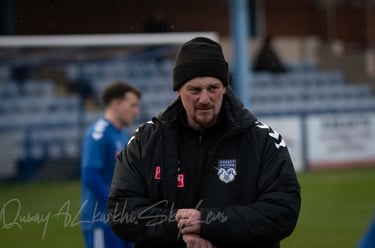
Chasing the Moment
The Gritty Beauty of Local Sports Photography
SPORT PHOTOGRAPHY

Why non-league football, a rainy afternoon, and the clash between Ossett United and Dunston provided the perfect canvas for capturing raw emotion.
There is a distinct electricity in sports photography that you just don’t find in a studio. It’s the adrenaline of the uncontrolled environment. You are trying to impose order on chaos, attempting to freeze a fraction of a second that perfectly encapsulates speed, power, elation, or heartbreak.
Many aspiring photographers dream of the sidelines at Old Trafford or Anfield, with massive telephoto lenses and perfect lighting. But the true heart of sports photography—and often the best place to learn the craft—beat loudest at the local level. Non-league football offers an access, a rawness, and a texture that is unmatched.
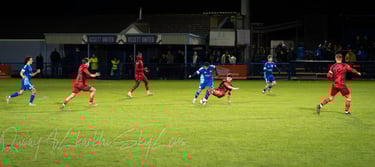
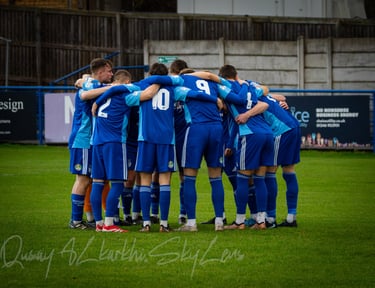
Last weekend, I packed my gear and headed down to photograph the clash between Ossett United and Dunston. It was an afternoon that perfectly illustrated why I love this genre: it started as a standard match and ended as a masterclass in atmospheric shooting, thanks to the unpredictable British weather.
The Challenge of the Pitch
Before diving into the match itself, it’s worth noting what makes sports photography difficult. It is a constant battle against three elements:
Speed: The action moves fast. If you see the moment happen through your viewfinder, you’ve already missed it. You have to anticipate where the ball is going, not where it is.
Focus: Keeping a sprinting winger sharp while blurring the background requires technical mastery of autofocus tracking and aperture.
Positioning: Knowing the sport is vital. Understanding that a corner kick might lead to a header at the near post means you position yourself to capture the goalscorer’s face, not their back.
Game Day: Ossett United Vs. Dunston
The atmosphere at a local ground like Ossett’s is fantastic. You are close to the pitch—close enough to hear the shouts of the managers, the thud of the tackles, and the groans of the crowd.
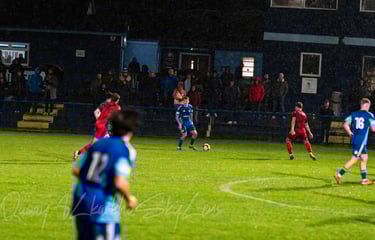
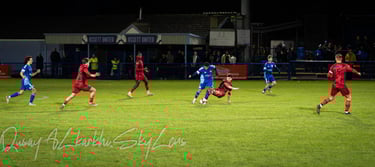
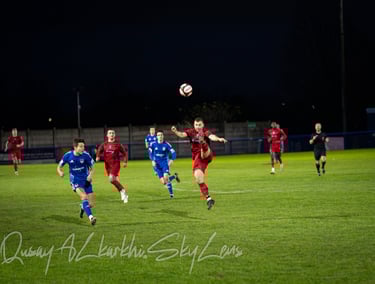
The game itself was a tough battle. Dunston arrived organized, physical, and clinical. From a photographic perspective, this meant tracking the Dunston forwards as they broke the lines. They were relentless.
Despite Ossett United's best efforts and some gritty defensive work, Dunston managed to find the net twice. The final score was a 2-0 victory for the visitors. While it wasn’t the result the home crowd wanted, for a photographer, the narrative of the match was clear: one team pressing, the other holding on. This dynamic creates great tension in images—desperate lunges to block shots and the jubilation of a hard-fought goal.
Then, The Rain Came
The first half was photographed under typically flat, grey skies—good for even lighting, but perhaps lacking a bit of drama.
Then, midway through the second half, the heavens opened.
Many spectators ran for cover. Some photographers might have packed up their gear to protect it. I stayed put (thankfully, my gear has decent weather sealing, and I had a rain cover handy).
Rain is a game-changer in sports photography. It is the element that transforms a "record shot" of a football match into a piece of art.
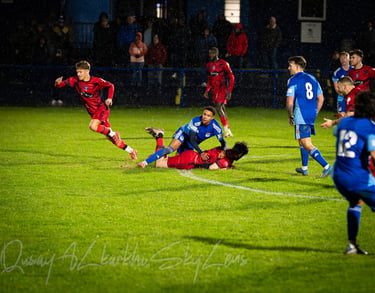
Suddenly, the game took on a new texture. The pitch grew slick, meaning tackles became slides, kicking up sprays of water and mud. The players’ hair became plastered to their foreheads, and you could see the water dripping off their faces as they argued a call with the referee.
The "Texture" of the Match
When I review the photos from that afternoon, the images taken during the downpour are infinitely stronger.
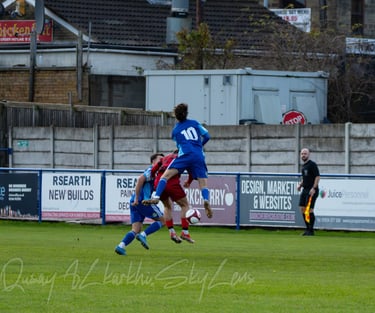
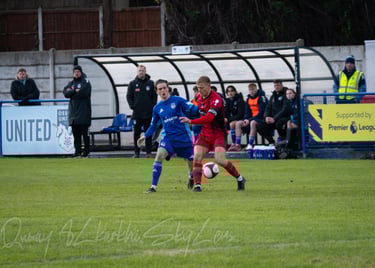
The rain added a layer of visible atmosphere between the lens and the subject. It softened the background highlights but added grit to the foreground action. One of my favourite shots of the day involved an Ossett midfielder battling for possession near the touchline. In the dry, it would have been a standard tackle. In the rain, it was an explosion of water, grimaced faces, and flying turf.
The rain emphasizes effort. It makes the players look like warriors. The final 2-0 scoreline almost felt secondary in the photos; the story became about the battle against both the opposition and the elements.
Lessons from the Sidelines
My afternoon shooting Ossett vs. Dunston reinforced a few key things about photographing local sports:
Embrace the Weather: Never hope for sunny days. Rain, snow, and mud add character and drama that clear skies can’t compete with. Bad weather makes for good photos.
Get Low: I spent most of the match kneeling or sitting on a portable stool. Shooting from a low angle makes the players look heroic and makes the jumps seem higher.
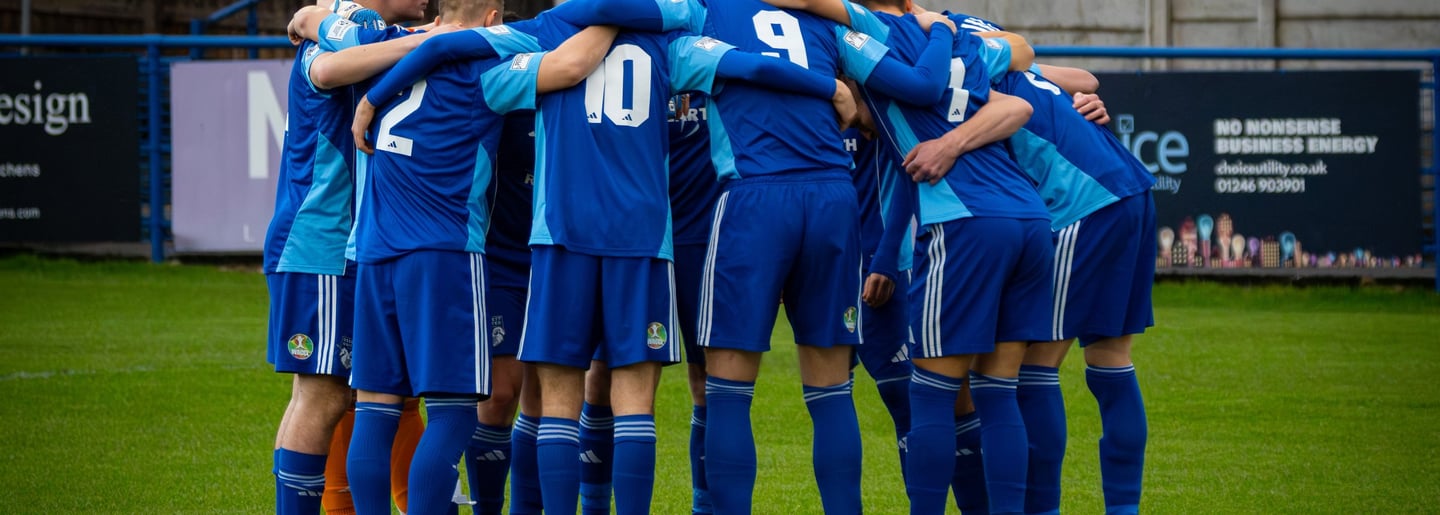
Keep Shooting After the Whistle: The reactions after a goal, a missed chance, or the final whistle are often better than the action itself. The dejection on Ossett faces and the relief on Dunston faces told the story of the 2-0 result better than a picture of the ball in the net.
Gallery
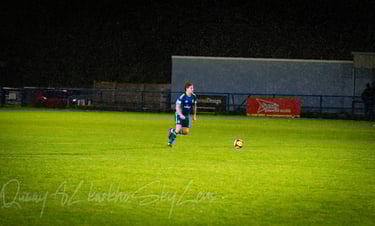
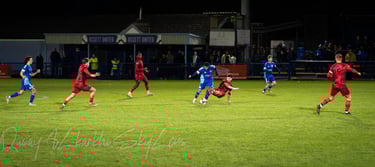
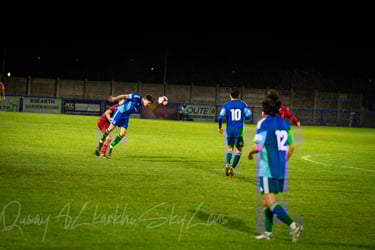
Enjoy some amazing shots from the game